

Café · Calgary · ⭐ 9.9/10 · 475 reviews · updated: 2026-08-10 15:36:01
Address: 1110 9 Ave SW, Calgary, AB T2P 1M1, Canada
Most cafés that call themselves Mexican mean a mural and a playlist. Frida’s Coffee Home means the supply chain. The beans come from named growing regions in Guerrero, Veracruz and Chiapas through direct relationships with the farms, they are roasted in small batches in Calgary, and the drinks list includes things that had to be explained to this city rather than borrowed from it. It is a café built by two people who moved here from Acapulco and decided the honest version of the idea was worth the extra work.
Highlights
- They roast, and they roast Mexican — beans arrive from Atoyac in Guerrero, Huatusco in Veracruz and from Chiapas, and are roasted here in small batches rather than bought in from a wholesaler.
- Direct trade, with the regions named — the sourcing is specific enough to be checkable: shade-grown arabica from Chiapas, Typica, Bourbon and Caturra from the Guerrero highlands, Catimor and its relatives from Veracruz.
- Drinks Calgary did not previously have — café de olla brewed in the traditional way and atole are on the counter as everyday items, not as a festival novelty.
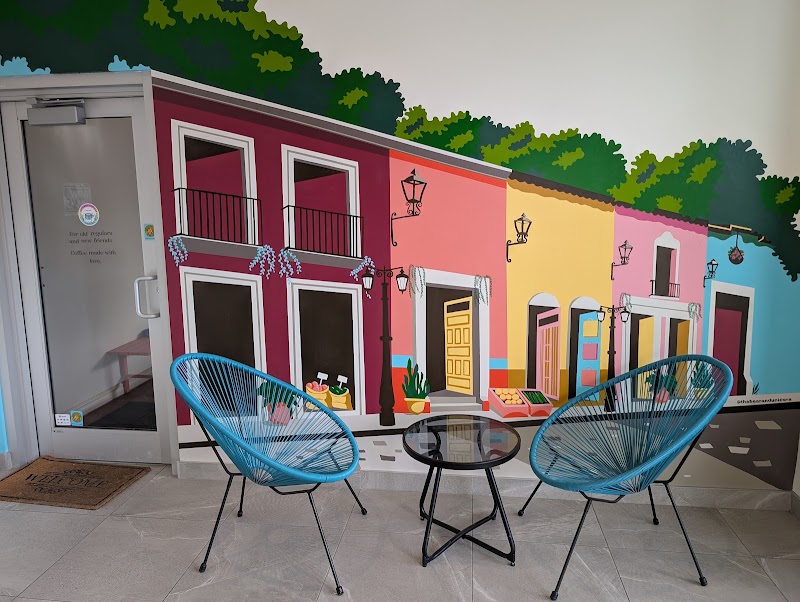
- A Pueblo Mágico as the design brief — the founders took their cue from San Miguel de Allende, and the concept of Mexico’s designated magic towns runs through how the room is put together.
- Family recipes on the pastry side — the sweet counter is built from the founders’ own household traditions rather than from a supplier catalogue, with the concha as the anchor.
- Three house coffee lines — Cozy Coati, Cheerful Toucan and Adventurous Jaguar, each pitched at a different drinking style, and all available to take home or ship.
What’s in the cup
Mexico is one of the world’s significant coffee origins and one of the least represented on Canadian café menus, which is the gap this business was built to fill. Everything poured here traces back to specific regions: Chiapas, where shade-grown arabica produces the citrus, floral, chocolate and nutty register most people associate with good Mexican coffee; the Guerrero highlands around Atoyac, where the tropical climate supports Typica, Bourbon and Caturra with fruit and floral character; and Veracruz around Huatusco, where Catimor, Obata and Sarchimor bring vanilla and caramel weight. Naming varietals is not showing off — it is the evidence that somebody actually chose these lots.
The roasting is done in Calgary in small batches, which is the decision that separates a café with a story from a roastery with a café. It means the freshness clock starts here rather than in a warehouse, and it means the profile can be tuned to what these particular lots want rather than to a generic house curve. The three house lines are pitched at different drinkers, from the comfortable everyday cup to something with more edge, so the range does not force a single palate on everyone who walks in.
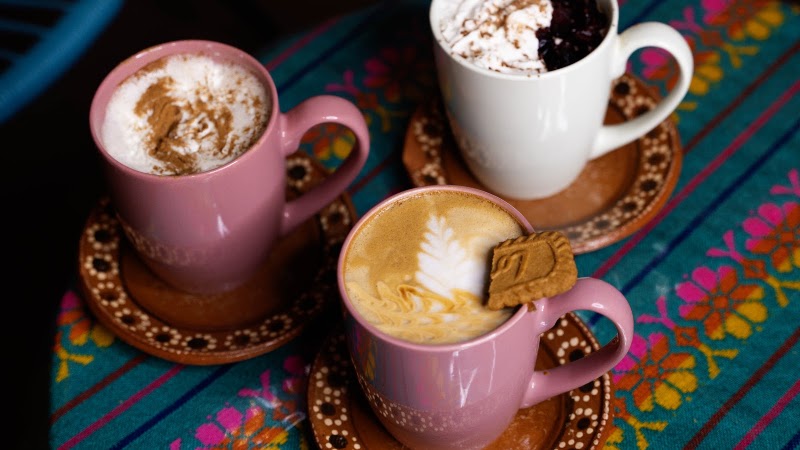
Then there is the part that no other café in the city is doing at this depth. Café de olla is the traditional Mexican preparation — coffee brewed in a clay pot with cinnamon and unrefined cane sugar — and it is a genuinely different drink, not a flavoured latte with a Spanish name. Atole, the warm masa-based drink, belongs to the same tradition. On the espresso side, cajeta and mazapán turn up as the sweetening logic instead of the usual vanilla-and-hazelnut default, which is the single quickest way to taste the difference between a Mexican café and a Canadian café doing Mexico as a theme.
Who’s behind it
Frida Murillo and Zaheen Hamidani started the business in 2022, not long after arriving in Canada, with roots in Acapulco. The founding observation was simple: there was room here for more than a good cup, and the culture attached to Mexican coffee was almost entirely missing from the city.
Their reference point is the Pueblo Mágico — the towns Mexico designates as magic for their history, craft, food and beauty — and specifically San Miguel de Allende, where the founders say history, artistry and culture blend into one another. That reference explains why the place is not styled as a taqueria or a beach bar. The stated ambition is a home away from home, and the recipes come from the family: the coffee traditions from Frida’s grandmother, the desserts from her mother. In a category full of invented heritage, this is heritage with names attached.
What kind of visit it suits
The clearest use is the unhurried one. This is a room designed around conversation — the founders describe it in terms of people meeting each other, and in practice it draws a mix of artists, small-business people and neighbourhood regulars who treat it as a living room rather than a fuel stop. If you have somebody to catch up with and an hour to do it properly, this is the right kind of café.
It also works very well as a discovery visit. If you have never had café de olla, or have only ever met Mexican coffee as a supermarket blend, coming here with the intention of trying something you cannot get elsewhere is a better plan than ordering your usual flat white. Bring somebody who likes being introduced to things.
For laptop work, the honest position is that the café does not publish a policy on laptops, Wi-Fi or power, and the room is a neighbourhood-scale space rather than a large hall. Treat it as suitable for a focused stretch outside busy periods rather than as an all-day desk, and if power matters to your plan, look before you settle. As a takeaway stop it is straightforward, and there is a further option most cafés cannot offer: if you like what is in the cup, the same coffee is sold in bags and shipped across the country, so the visit can turn into a standing supply.
The room and the mood
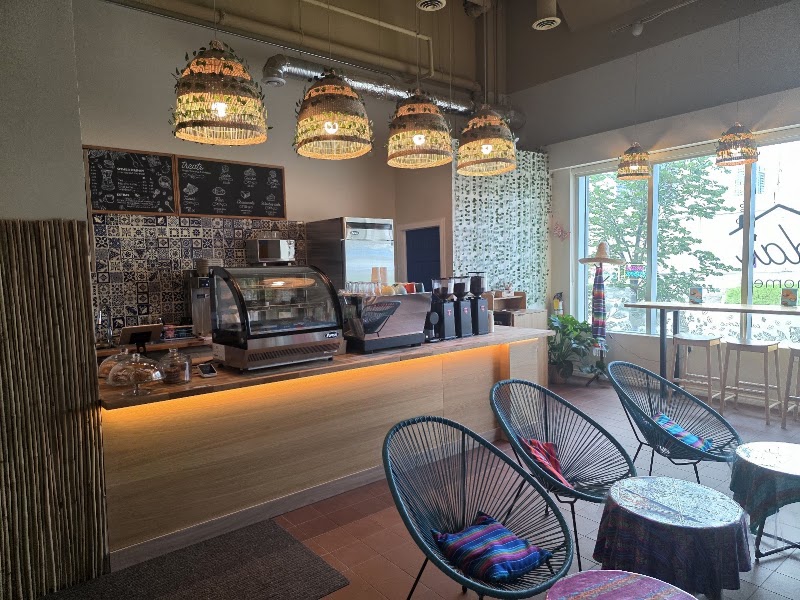
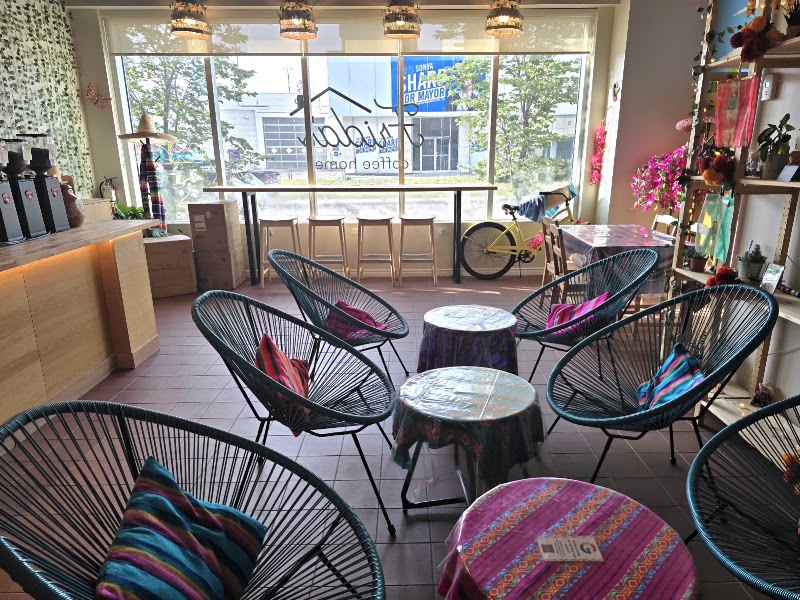
The atmosphere is the point, and it is built on warmth rather than on the pale minimalism that dominates specialty coffee. The Pueblo Mágico reference gives the space colour, craft objects and a sense of somewhere lived in — the aesthetic of a Mexican colonial town rather than a Scandinavian showroom. The founders’ own phrase for what they wanted is a home away from home, and the room is arranged to support that: people stay, tables turn slowly, and the noise is conversation rather than machinery.
It is a neighbourhood-scale café rather than a cavernous one, which cuts both ways. The intimacy is real and it is why regulars treat the place as theirs; the flip side is that a busy weekend hour genuinely fills it. There is no separate quiet mezzanine to escape to, so the room you walk into is the room you get.
What is worth knowing is that this is one of the few cafés in Calgary where the cultural specificity is not decoration you can ignore. The music, the smell of cinnamon coffee, the shape of the pastries and the language at the counter all point the same direction, and that coherence is most of the reason people come back.
What goes with the coffee
The food side runs on Mexican home baking rather than the standard Canadian café tray of croissants and banana bread. The concha — the shell-topped sweet bun that is the default breakfast pastry across Mexico — is the anchor, and it does the same job here that it does there: something soft to dunk in coffee first thing. The dessert side leans on the classics of a Mexican household kitchen, tres leches above all, and there is a savoury option for anyone who wants something more substantial than sugar.
Two honest notes. First, the café does not spell out publicly which items are baked on the premises and which are prepared elsewhere, so it is fair to ask at the counter if that matters to you. Second, this is a bakery-café, not a restaurant: expect proper coffee-companion eating rather than plated meals with courses. Within that scope it is unusually distinctive, because almost nothing on the counter duplicates what the café next door is selling.
When to come
The rhythm is a neighbourhood one rather than a downtown-tower one. Mornings suit the pastry-and-coffee visit; the middle of the day is calmer and the best window for a table and a long conversation; weekends bring the discovery crowd and the place is at its liveliest and most social then. If your visit is specifically about tasting café de olla properly and talking to somebody about it, the quieter weekday stretches are the better bet.
Because it sits on the western edge of downtown rather than deep in the office core, it does not empty out the way tower-base cafés do — but it also does not keep late-night hours, so an evening plan should be checked against the schedule on the card rather than assumed.
Getting there
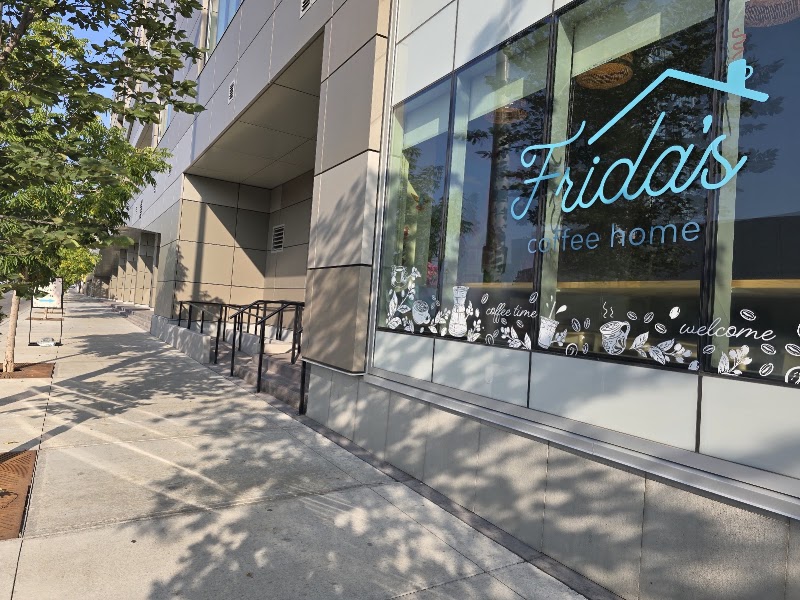
The café sits at the western edge of downtown Calgary, in the West Village pocket where the office core gives way to residential towers and the river. It is a short walk from the western end of downtown proper, and the nearest CTrain stop is the Downtown West–Kerby station, which puts it inside easy reach of the free-fare corridor across the core.
The river pathway system runs close by, which makes this a natural stop for anyone walking or cycling the Bow River route rather than commuting — a genuinely pleasant way to arrive in summer. Drivers should treat it as a downtown-fringe destination: conditions are easier than in the heart of the core, but this is not a suburban parking lot.
Good to know
The strongest reasons to come are specific and verifiable: coffee sourced directly from named Mexican regions, roasted in small batches in Calgary, and a drinks list with traditional preparations that essentially nobody else in the city offers. If you want to take the experience home, bags of the house lines are sold on site and shipped nationally, and there is a wholesale side for offices and restaurants.
The honest limitations: it is a small neighbourhood room, so peak times are tight; the café does not publish policies on laptops, Wi-Fi or power, so plan a working session conservatively; and the split between what is baked in-house and what is brought in is not stated publicly. None of these are dealbreakers, but they are the questions worth asking at the counter rather than assuming.
One more practical point: this is a place where ordering the unfamiliar thing is the better strategy. A café that has gone to the trouble of importing directly from three Mexican regions and reviving traditional preparations is not really being used properly by a guest who orders a plain latte and leaves.
Questions and answers
Do they roast their own coffee?
Yes. Beans are sourced directly from farms in Guerrero, Veracruz and Chiapas, and roasted in small batches in Calgary. The house lines are sold in bags on site and shipped across Canada.
What should I order if I have never been?
Café de olla, the traditional clay-pot preparation with cinnamon and unrefined cane sugar. It is a different drink from anything on a standard Canadian café menu, and it is the clearest expression of what this place is for.
Is the Mexican side real or decorative?
Real. The founders are from Acapulco, the sourcing is region-specific, the recipes come from their own family, and drinks like atole and the cajeta and mazapán lattes are not available in most of the city at all.
Who runs it?
Frida Murillo and Zaheen Hamidani, who started the business in 2022 after moving to Canada. The concept is modelled on Mexico’s Pueblo Mágico towns, with San Miguel de Allende as the specific reference.
Is the food baked on site?
The café does not state publicly which items are made on the premises. The recipes are family ones and the range is Mexican home baking, with the concha as the everyday anchor — but if in-house production matters to you, ask at the counter.
Can I work here?
For a focused stretch outside busy periods, yes. There is no published policy on laptops, Wi-Fi or power, and the room is neighbourhood-sized, so it is not the place to set up for a full working day.
Is it good for a group?
For a small group in a quieter part of the day, yes — the whole room is built around people talking to each other. Larger parties at a weekend peak will find it tight.
Can I buy the coffee to brew at home?
Yes. Three house lines are available in bags, they ship nationally, and there is a wholesale programme for offices, restaurants and other cafés.
How do I get there without a car?
It sits on the western edge of downtown, close to the Downtown West–Kerby CTrain stop and within easy reach of the free-fare corridor across the core. The river pathway network also runs nearby, which makes it a good stop on a walk or a ride.
Opening hours
| Day | Hours |
|---|---|
| Monday | 08:00–17:00 |
| Tuesday | 08:00–17:00 |
| Wednesday | 08:00–17:00 |
| Thursday | 08:00–17:00 |
| Friday | 08:00–17:00 |
| Saturday | 09:00–17:00 |
| Sunday | 09:00–17:00 |
Photos
Visitor reviews
Reviews last updated: 2026-08-10 15:36:01
Data is refreshed monthly. Sources: calgarynka.com and editorial picks based on reviews.
Чудово провів час у Frida’s Cafe. Я завітав на каву та скуштував одну з їхніх страв, і обидва були чудовими. Кава була насиченою та ароматною, а страва – свіжою та смачною.
Що справді вразило, так це атмосфера. Кафе має…
Просто перлина! Це місце таке затишне та спокійне, що щиро відчуваєш себе як у тихій кімнаті власного дому. У них є унікальний вибір смачної, оригінальної кави, яку ви не знайдете більше ніде. На додачу до всього, персон…
Вирішив спробувати цю кав'ярню після прийому лікаря, і радий, що зробив це. У кав'ярні одразу після мого приходу панувала тепла, розслаблена атмосфера.
Я згадав, що вперше куштував їхню каву, і працівник за стійкою був…
Я зустрів тут друга, і нам обом дуже сподобалося. Декор такий гарний; барвистий, але не надто захаращений. Є різноманітні місця для сидіння та багато природного освітлення. Ми замовили гарячий шоколад та орчату, і обидва…
Доброго дня) Затишна спокійна атмосфера, швидке обслуговування) Смачна кава) все що треба зранку)))) Thanks, all very nice))